Reference Desk
Field guides for shower trailer logistics across Colorado, from the plains to the high country.
- Wildfire and Emergency Response Shower Trailers in Colorado
- Running Shower Trailers Through a Colorado Winter at Altitude
- Shower Trailers for Colorado Events, Rodeos, Fairs and Festivals
- Shower Trailers for Colorado Construction, Energy and Ranch Crews
Wildfire and Emergency Response Shower Trailers in Colorado
How we deploy shower trailers to fire camps and disaster sites across Colorado, from mountain access and remote water hauling to crew rotations and weeks long servicing.
Fire season in Colorado stopped having a start date years ago. We have taken calls in March for a grass fire out on the eastern plains and calls in late October for timber burning in the high country above Steamboat Springs. What does not change is the way a camp comes together. A few hundred people land in a hay field, a school parking lot, or a gravel turnout at the end of a forest road, and inside of a day that patch of ground has to work like a small town. Showers are part of that town. Here is how we run shower trailers for wildfire and emergency response across Colorado, and what incident managers, contractors and county emergency coordinators should know before they place the call.
What crews actually need at the end of a shift
A hand coming off a sixteen hour line assignment is carrying soot, ash, sweat and whatever the wind put on them. They are tired, they are usually cold by the time the sun drops behind the ridge, and they have to be back on the line early. The shower is not a luxury at that point. It is the thing that lets somebody sleep, and sleep is what keeps the crew safe the next day.
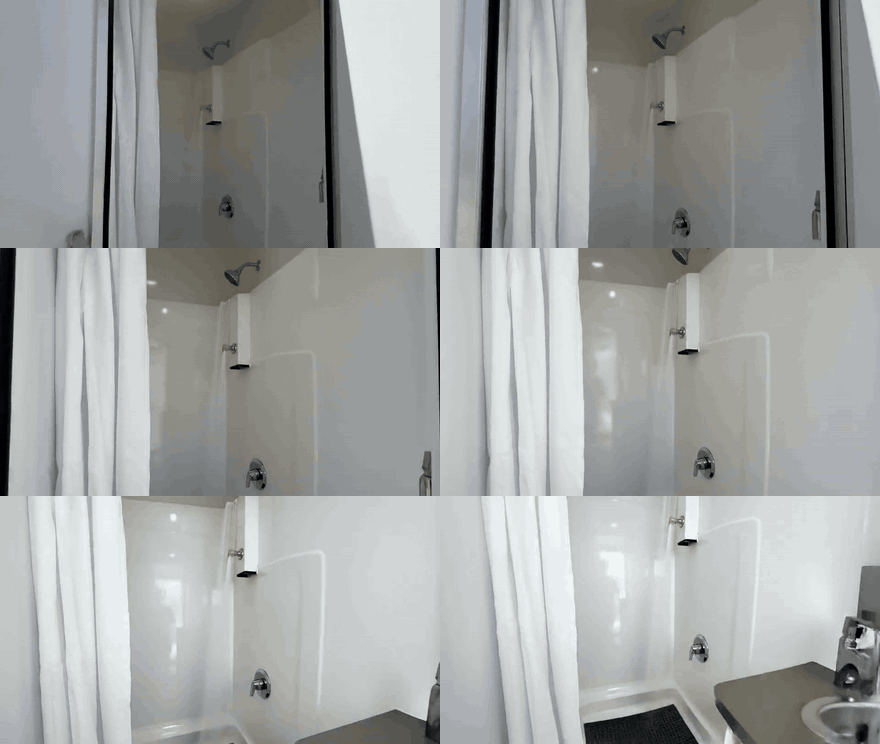
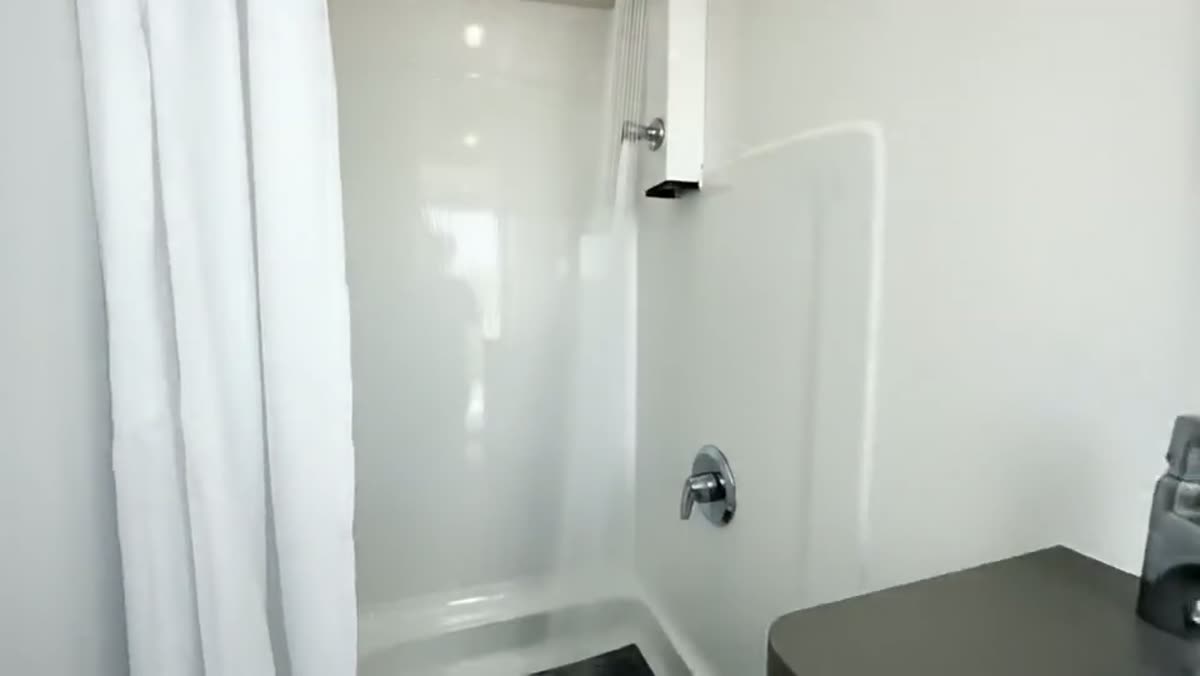
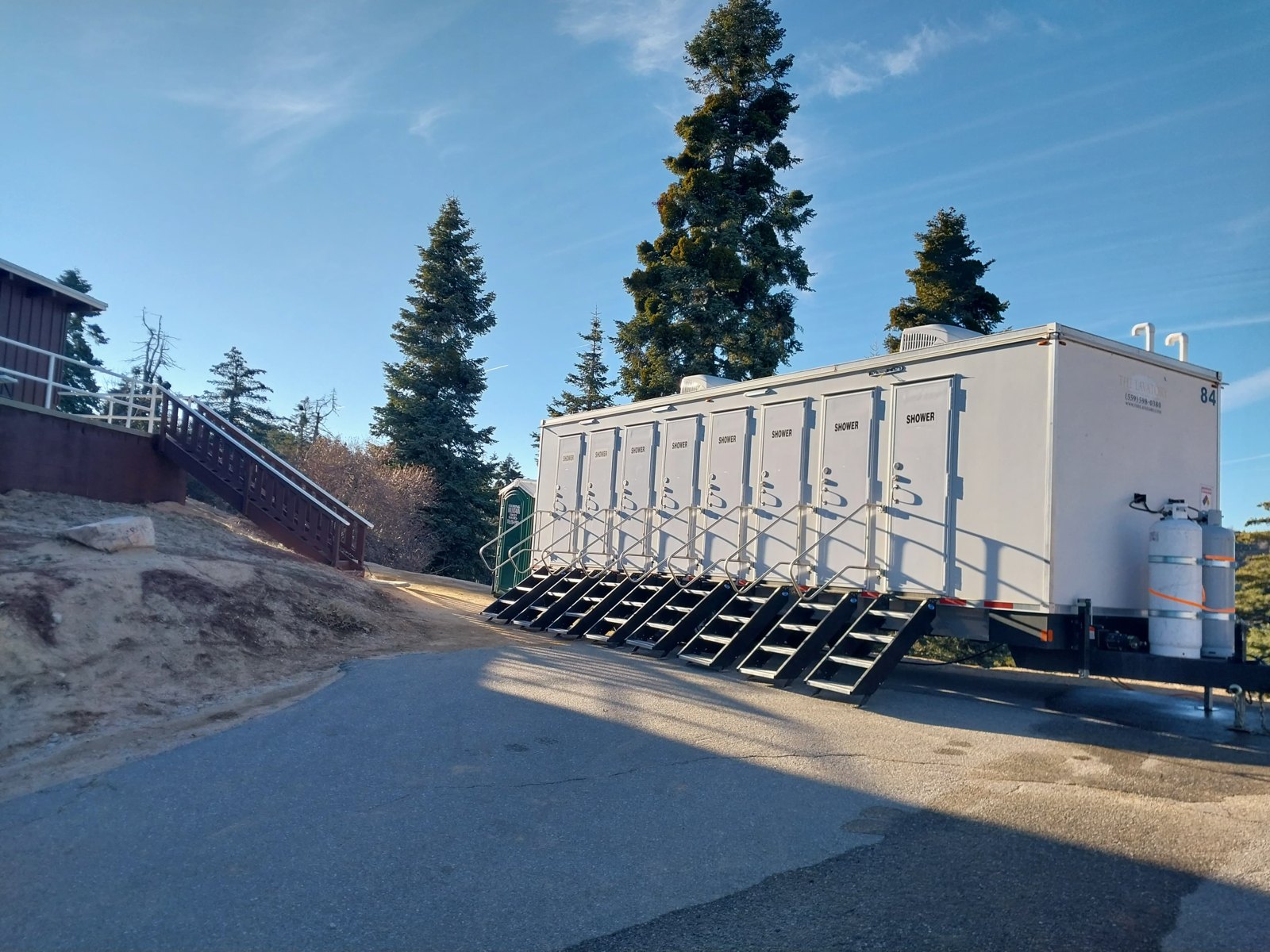
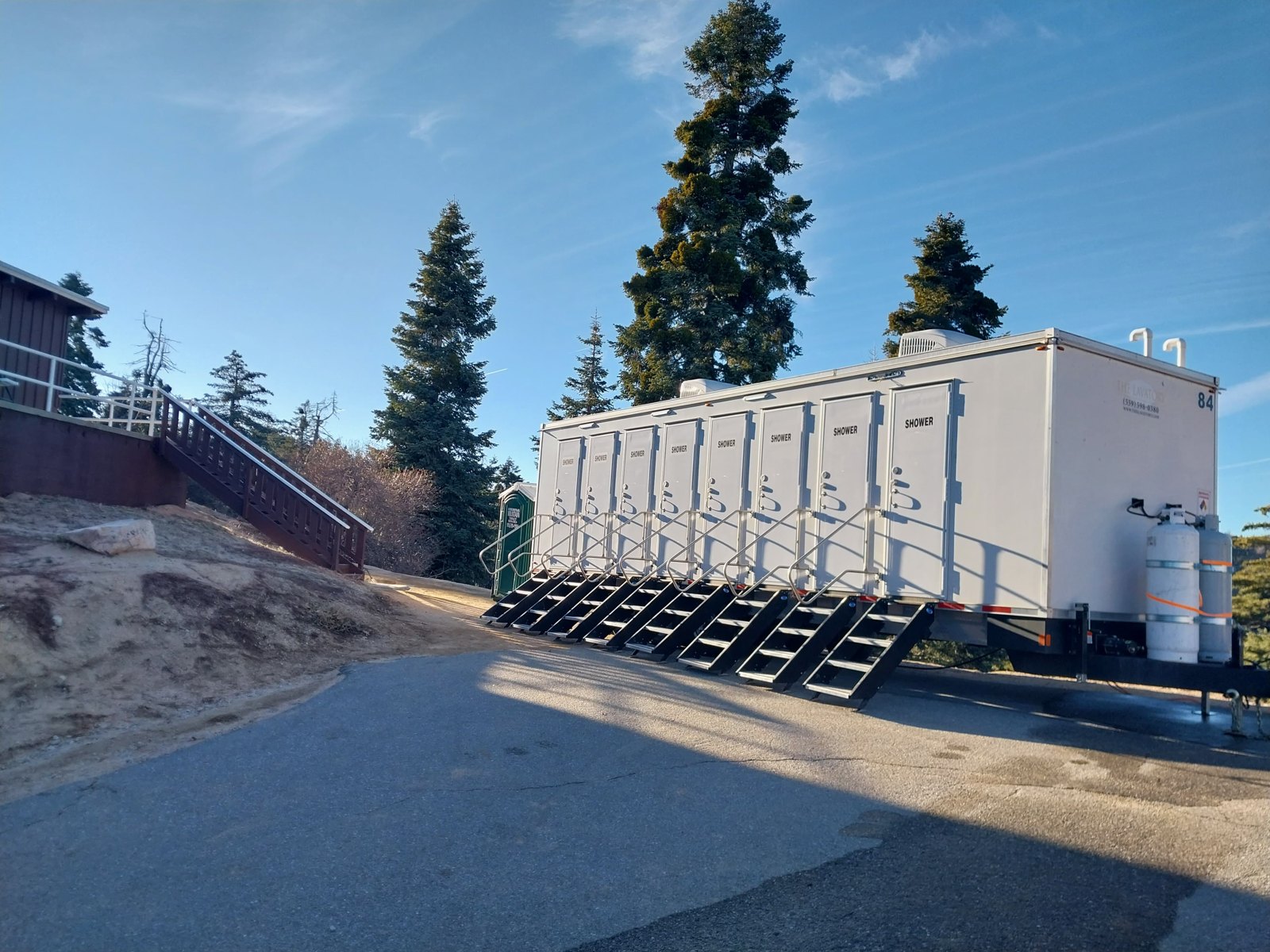
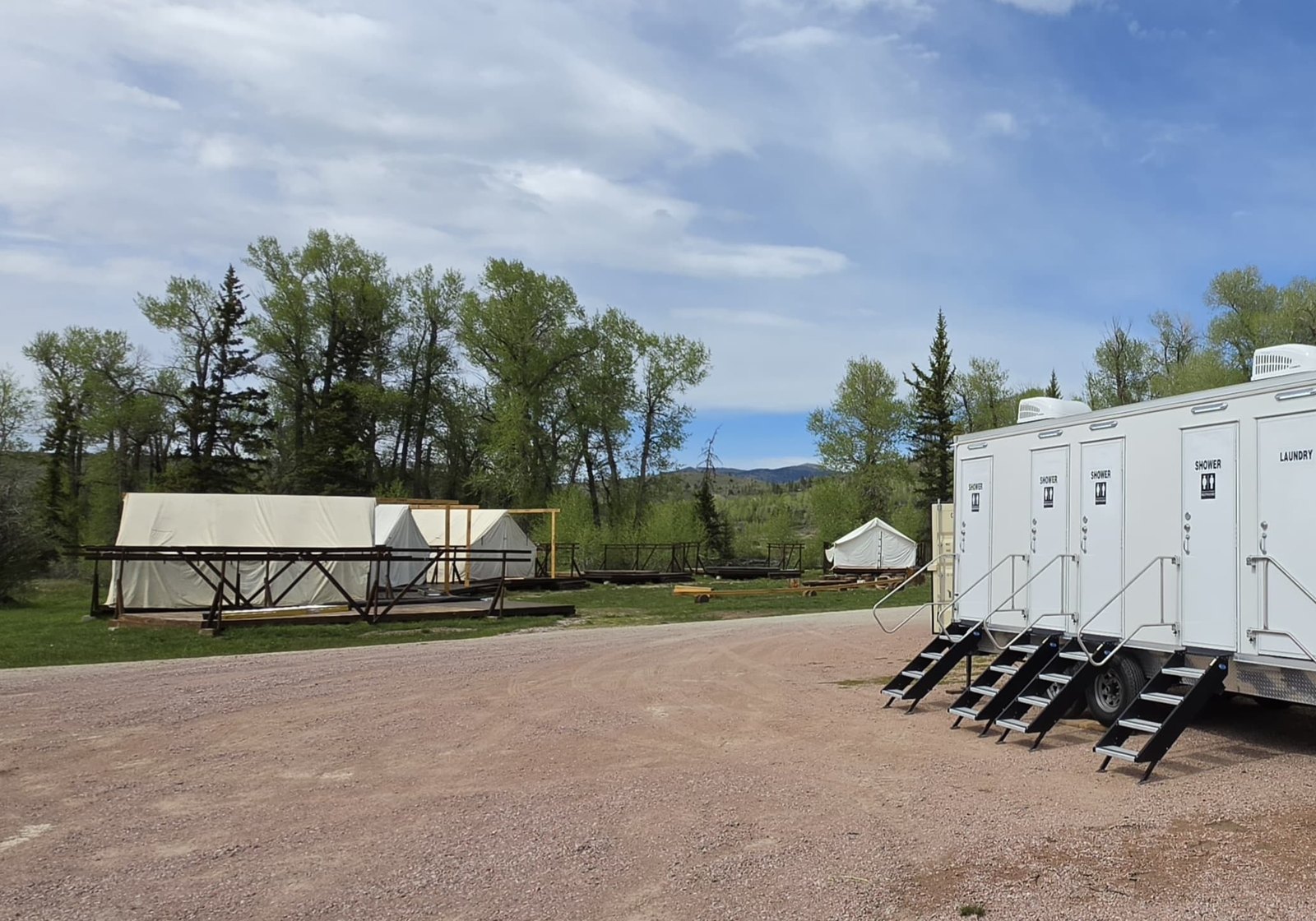
That is why we run luxury mobile shower trailers on incidents rather than the bare bones setups that used to be standard. Each unit has private individual stalls with a door that latches, on demand hot water so the last person in line gets the same shower as the first, climate controlled interiors, and sinks and vanities with mirrors and lighting so people can shave and clean up properly. ADA accessible units are available when the camp needs them, and on a long incident with support staff and command personnel we usually recommend planning for one.
Rapid deployment, and what rapid honestly means in Colorado
We stage so that we can cover the state, and we are straight with people about drive times. A unit heading from the Front Range to a fire in the San Juans near Durango is a long haul over passes, and anybody who promises you a four hour response to the southwest corner is guessing. What we can do is commit to a departure time, tell you the route we are taking, and keep you updated while the driver is rolling.
For incidents near Denver, Aurora, Boulder, Fort Collins, Greeley or Colorado Springs, same day placement is usually realistic if the call comes in early enough. Grand Junction and the Western Slope, Pueblo and the southeast, and the mountain counties all take longer, and weather can stretch that. During red flag stretches we pre position units where the forecast says trouble is coming, which is the single biggest thing that shortens response time.
Getting a trailer to a remote mountain camp
This is where most of the real problems live. A shower trailer is a long, heavy tow, and a lot of Colorado fire country is reached by roads that were built for pickups and water tenders. Before we commit to a location we want to know about grade, switchback radius, road surface, overhead clearance from tree limbs and power lines, and whether there is a place to turn around at the far end.
- Grade and length. Sustained climbs on loose gravel are hard on a tow vehicle and harder on the way back down. We plan the route, not just the destination.
- Turnarounds. Backing a long trailer a quarter mile down a one lane forest road in the dark is how equipment gets damaged. We need a place to swing it.
- Ground. Firm and reasonably level beats scenic every time. Decomposed granite and packed gravel are good. Soft meadow and fresh fill are not, especially after an afternoon storm.
- Clearance. Low limbs on a forest road will take out a roof vent. Somebody should drive the route in a tall vehicle first.
Water, power and waste when nothing is hooked up
Most fire camps have no utilities at all. That is normal for us, and it just means the support plan has to be built before the trailer arrives.
Water can come from a potable hauler on a schedule, from a bulk tank staged next to the unit, or from a hydrant meter if the camp is in town at a fairgrounds or school. Power is usually a generator, either the camp's or one we bring, sized for the unit and placed far enough away that the noise does not sit on top of the sleeping area. Waste goes to onboard holding and gets pumped by a vacuum truck on a set schedule, and on a busy camp that schedule is daily or better.
The mistake we see most often is treating water in and waste out as separate problems handled by separate vendors who never talk to each other. We would rather sit down with the logistics chief once at the start and agree on who is hauling what, when they arrive, and who gets the call if a truck is late. Showers on an incident fail because of a missed pump out far more often than they fail because of equipment.
Sizing to the crew rotation
Raw headcount is the wrong number to plan from. What matters is how many people want a shower in the same ninety minute window. On most incidents that is right after the evening demobilization briefing, with a smaller push before the morning rotation goes out.
We ask for the shift structure, not just the census. If three crews come off at once, the camp needs more stalls or a staggered release. If the camp runs a day rotation and a night rotation, the same equipment can carry a much larger headcount because the peaks are spread out. A short conversation about timing usually saves an incident from renting more equipment than it needs.
Servicing an incident that runs for weeks
A two week incident is a different animal than a weekend callout. We build a daily service cycle into the contract: clean and sanitize the stalls and vanities, restock consumables, check the water heaters and pumps, confirm the waste level, and log it. On the larger camps we staff an attendant so that somebody is watching the unit through the peak hours instead of discovering a problem the next morning.
The calls that are not fires
Wildfire is the headline, but emergency work in Colorado covers a lot of ground. Spring runoff and flash flooding take out water systems in mountain towns. A hard freeze breaks mains and leaves whole neighborhoods without service. Blizzards on the plains strand crews and fill shelters. Utility outages, mudslides on the mountain corridors, and post fire debris flows all generate the same basic need, which is a warm, clean, private place for responders and displaced residents to get cleaned up.
Those jobs tend to be in town, which makes utilities easier, and they tend to be cold, which makes freeze protection the priority. We handle both the same way: figure out the support plan first, then place the equipment.
What to have ready when you call us
- The exact staging location, with coordinates or a pin, plus how a tow vehicle gets there
- Expected headcount and the shift rotation, not just a total
- Expected duration, even if it is a rough range
- Whether water, power and waste service exist or need to be arranged
- Ground conditions at the pad and recent weather
- A named point of contact who will actually be on site when the driver arrives
- Any agency paperwork or vendor onboarding we need to complete before we roll
Give us those seven things and we can usually have a unit committed and moving the same conversation. Colorado emergency work rewards people who plan the boring parts early, because the interesting parts take care of themselves once the equipment is on the ground and serviced.
Running Shower Trailers Through a Colorado Winter at Altitude
Freeze protection, altitude effects, mountain access and the site conditions a shower trailer needs to survive deep cold in the Colorado high country.
Anybody can put a shower trailer on a jobsite in July. Colorado separates the operators in January, at eight or nine thousand feet, when the overnight low sits well below zero and the wind is moving. We have run units through winters in the mountains and on the plains for years now, and almost every hard lesson came from cold. Here is what actually keeps a shower trailer running through a Colorado winter, what we do to the equipment, and what a site has to provide before we will place a unit in deep cold.
What cold does to a shower trailer
Water expands when it freezes, and it does not care what it is inside of. In a shower trailer the vulnerable points are the supply line from the site connection, the pump, the water heater, the manifolds, the fixtures inside each stall, the drains, and the waste line running out to the tank or the sewer connection. Freeze any one of those and the unit is down.
The freeze usually does not happen in the middle of the night at the coldest hour. It happens in the early morning after the site has been quiet for eight hours and nothing has moved through the lines. It also happens at the ends, meaning the exposed hose lying on the ground and the last few feet of drain, which are the parts furthest from any heat source and the parts people forget about.
How we protect a unit for winter
Freeze protection is layered. No single measure carries a Colorado winter by itself.
- Continuous interior heat. The trailer stays heated, not heated on demand. Letting the interior swing down to ambient between uses is what cracks fixtures.
- Heated and insulated utility compartments. The plumbing bay is where the pump, heater and manifolds live, and it gets treated as living space, not storage.
- Heat traced and insulated lines. The supply hose and the waste line get heat tape and insulation, with the heat tape actually plugged in and verified, which is the step that gets skipped.
- Skirting. Blocking wind from getting under the trailer makes a bigger difference than most people believe. Moving air under the floor pulls heat out of the undercarriage fast.
- Keeping water moving. On the coldest nights a small, deliberate flow through the system beats a static column of water sitting in a line.
- A real drain down procedure. If a unit is going to sit unused and unpowered, it gets drained properly and blown out. Half measures here cost more than anything else on the list.
What altitude changes
A lot of Colorado work happens between six thousand and eleven thousand feet, and altitude quietly changes the behavior of everything that burns fuel or pushes air.
Combustion appliances lose output as the air thins, so a water heater that performs one way near Pueblo performs differently at a ski area job above Steamboat Springs. Naturally aspirated generators lose output as elevation climbs, which means the generator that ran a unit fine on the plains may be marginal at a high mountain site. We size and configure for the elevation the unit is actually going to, and when a customer supplies the generator we ask what it is rated at and where it has been running.
Mountain access in winter
Placement in winter is a different job than placement in summer, and the deciding factor is almost never the trailer. It is the road and the pad.
We want a plowed approach with room for a tow vehicle to work, and we want to know who is plowing it for the length of the rental. A pad that gets plowed once for delivery and then forgotten becomes unreachable for service two storms later. We also want the unit placed so a plow can get around it without burying the utility side or piling a berm against the door.
- Pick the sunny side. A north facing pocket in the trees at nine thousand feet holds ice from November to April. Southern exposure does real work for you.
- Watch the drip line. Do not park under a roof edge, a rock face, or anything that sheds snow. A slide off a metal roof will destroy equipment.
- Keep the approach flat. Frozen gravel is fine. A frozen grade with a trailer on it is not.
- Think about the exit. The trailer has to come out eventually, often in the worst conditions of the season. If the only way out is a road that closes, plan around it.
- Traction at the door. Steps and the landing area ice up from shower runoff and tracked snow. Sand, mats and a bag of ice melt at the unit are cheap and prevent injuries.
We chain up when we need to, we watch the pass forecasts, and we will reschedule a delivery rather than put a driver and a trailer on a closed corridor. Customers who build a day of slack into a winter delivery almost never have a problem.
What a site has to provide in deep cold
Winter placement has a short list of non negotiables. Power has to be continuous and reliable, because every layer of freeze protection depends on it. A generator that gets shut off at the end of the shift to save fuel will freeze a trailer by morning, and that is the single most common cause of a winter failure we see.
The water source has to be protected too. A hydrant meter, a heated tank, or a hauler on a winter schedule all work. An uninsulated hose lying in the snow does not. And the waste plan has to account for pump trucks in winter conditions, which means the service vehicle needs the same plowed access the delivery truck had.
We walk through all of this before a winter rental starts, and we put it in writing. It is not paperwork for its own sake. It is the list of things that, if any one of them lapses for a single night, ends with a frozen unit and a crew with nowhere to clean up.
Ski country and seasonal staff
Resort towns have their own version of this problem. Seasonal housing fills up, construction crews and lift maintenance teams show up in numbers the town cannot absorb, and hotel rooms are priced for visitors. Shower trailers show up at staff housing sites, employee parking areas, and contractor camps in and around the resort corridors, and those placements run for months rather than days.
Long winter placements need a maintenance rhythm: regular service visits, someone on site who knows how to check the heat tape and the interior temperature, and a clear phone number for the 2 a.m. call. We would much rather get a call at 10 p.m. about a heater acting strange than a call at 7 a.m. about a unit that is solid.
Mud season, which is its own hazard
Colorado's fifth season runs roughly from late March into May, and it wrecks more placements than deep cold does. Ground that held a loaded trailer in February turns to soup in April as the frost comes out. We have seen firm gravel pads swallow a tire in a week of warm afternoons.
The answer is planning the placement for the ground's worst condition, not the condition on delivery day. That means gravel or road base under the unit, cribbing under the jacks, and a realistic conversation about whether the recovery truck will be able to get to the same spot in six weeks. Sites near Greeley, Fort Collins and the Western Slope river bottoms are especially prone to this.
The short version
Winter operation in Colorado comes down to three things: uninterrupted heat and power, a protected water path from the source all the way to the drain, and access that stays open for service and recovery. Everything else on this page is a detail of those three. Get them right and a shower trailer will run all winter at altitude without drama, which is exactly how it should be.
Shower Trailers for Colorado Events, Rodeos, Fairs and Festivals
Sizing to the real peaks, placing a unit on a fairground or festival field, and servicing it through a multi day Colorado event.
Colorado puts on a remarkable number of events where people sleep on the grounds. County fairs and rodeos where families camp beside the livestock trailers. Music festivals in mountain valleys where the crowd arrives Thursday and does not leave until Monday. Endurance races, bike events, motorsport weekends, ranch rodeos, balloon festivals and town celebrations that have run for a century. All of them have the same quiet problem once the sun goes down, which is that a few hundred or a few thousand people have been outside all day in dust and heat and there is nowhere to get clean.
We have placed shower trailers at fairgrounds, hay fields, rodeo arenas and festival campgrounds all over the state. Here is what we have learned about making them work at an event.
Who actually uses the showers
Event producers usually think of showers as a camper amenity, and then discover the demand is broader than that. At a typical multi day event the users break down into a few groups, and they do not use the unit at the same times.
- Campers and attendees. Heaviest use, concentrated in the morning and again in the late afternoon before the evening program.
- Contestants and competitors. At a rodeo or a race, they want a shower right after they compete, which can be any hour.
- Stock handlers and barn crews. Early risers, and they are the dirtiest people on the grounds.
- Staff, volunteers and production crew. Often on site days before the gates open and days after they close, and often forgotten in the planning.
- Performers and their crews. Small numbers, but the expectation is high and the placement is usually backstage and separate.
The practical result is that an event with fifteen hundred campers does not need showers for fifteen hundred people at once. It needs enough capacity to carry a morning peak and an evening peak, plus a separate quieter unit for the people who keep the event running.
Sizing without guessing
The honest way to size an event is to work from the schedule, not the headcount. We ask three questions: how many people are on the grounds overnight, what time does the main program start and end, and is there a hard gap where everyone is free at once.
An event with a 9 a.m. start creates a brutal morning peak between roughly 6:30 and 8:30. An event with an afternoon start spreads demand over four or five hours and needs far less equipment for the same crowd. A festival with late night programming shifts everything, and the peak lands in the early afternoon.
From there it is arithmetic. Average shower length at an event runs shorter than people expect once there is a visible line, and it runs longer when the unit is comfortable and nobody is waiting. Both are true and both matter. We would rather bring one more stall than run a queue that turns into a complaint on your event's social feed Sunday morning.
Two other things that reduce demand more than adding equipment does: posting shower hours by camp zone so the peak is staggered, and putting the unit where people can see whether there is a line without walking over to it.
Placement on a fairground or a festival field
Placement decides whether the rental is a success. The requirements pull against each other, so somebody has to make the call early, ideally while walking the grounds with a site map in hand.
- Close to camping, not inside it. People will not walk fifteen minutes with a towel, but a unit set in the middle of tents runs pumps and doors all night next to somebody trying to sleep.
- Level, firm ground. Gravel, road base or packed dirt. Irrigated grass that looked fine Tuesday can be ruts by Saturday.
- Service vehicle access at all hours. The pump truck has to reach the unit after the crowd arrives and the roads fill with parked cars. Reserve the lane and cone it.
- Reasonable distance to water and power. Long hose and cord runs create trip hazards and pressure problems. Short runs keep the whole setup simpler.
- Light and sight lines. A unit in a dark corner behind a trailer feels unsafe and gets used less, especially by women traveling alone.
- A real accessible path. If an ADA unit is on site, the route to it has to be firm and passable, not a cut across a pasture.
- Drainage away from camping. Runoff, splash and foot traffic will turn the ten feet in front of the steps to mud. Mats and gravel fix it in advance.
Water, power and waste for a weekend
Fairgrounds in places like Greeley, Pueblo and Grand Junction often have hydrants and service panels, which makes life easy. Private land, mountain meadows and ranch venues usually have nothing, and that is normal for us.
Where there are no utilities the plan is the same as any remote site: a potable water supply that is either bulk staged or hauled on a schedule, generator power sized for the unit and placed with the noise in mind, and waste pumped on a set cadence. On a busy weekend event the pump schedule is not optional and it is not once. We build it into the quote so nobody is negotiating with a vacuum truck at 6 p.m. Saturday.
Generator placement is worth an extra minute of thought. Put it downwind and behind something solid if you can, because the sound carries in a quiet field at 2 a.m. and the complaints will come to you, not to us.
Multi day servicing
A three day event with heavy use needs servicing during the event, not just before it. Our standard approach is a cleaning and restock pass in the late morning after the first peak, and again in the evening, with an attendant on site through the peaks for larger events.
The attendant is the upgrade most producers underrate. Somebody who keeps the stalls stocked, wipes down between heavy runs, watches the water level and calls the truck before it is a problem changes the guest experience completely. The showers stop being the thing people tolerate and become the thing they mention in a good way.
Rodeos and county fairs
Rodeo and fair grounds have their own rhythm. The barn crews are up before five. The contestants want a shower at ten at night after the last go. There is dust in everything, and the dust at a Colorado fairground in August is fine and gets everywhere, which means vanities and mirrors get used hard.
Fair boards also tend to have long standing habits about where vendors park and where the water comes from, and those habits are usually right because they came from decades of running the same grounds. We ask. The person who has managed that fairground for twenty years knows where the ground stays soft and which hydrant has pressure, and that conversation saves everyone a bad Saturday.
Mountain festivals and Colorado weather
A festival in a mountain valley near Steamboat Springs or on the Western Slope can run eighty degrees at two in the afternoon and drop into the thirties by two in the morning, with a thunderstorm in between. That swing is exactly why climate controlled interiors and on demand hot water matter more at a Colorado event than they would somewhere flat and warm.
It also affects the schedule. Afternoon storms in July and August are close to reliable in the high country, and the hour after a storm clears is a demand spike because everybody who got soaked wants to warm up. Plan for it, and plan the power and hose runs so a downpour does not create a hazard.
Timeline and what we need from you
- Site map with your preferred placement and at least one alternate
- Overnight headcount, plus staff and crew counts that are often left out
- Daily schedule so we can find the real peaks
- Water source, power source, and whether waste service already exists
- Delivery window that lands before the grounds fill with parked vehicles
- Whether an ADA unit is needed and where the accessible route runs
- Who is on site for delivery, and who gets the call during the event
Book early for the summer months. June through September, every fairground, arena and festival field in Colorado is busy at once, and the units that handle a thousand person campground are not sitting idle in August. We would rather hold the right equipment for you in February than explain in July why the right equipment is somewhere near Durango for the weekend.
Shower Trailers for Colorado Construction, Energy and Ranch Crews
Western Slope logistics, sites with no utility hookups, and how long term crew shower placements are set up and maintained across Colorado.
Crew showers used to be a nice extra on a Colorado jobsite. They are closer to a requirement now, and the reason is simple. If you are asking people to work a long hitch on a remote pad in Rio Blanco County, or a mountain highway job where the nearest motel is an hour of switchbacks away, the condition they are in at the end of the day decides whether they come back next hitch. Clean, warm and rested is a retention strategy, not a perk.
We place shower trailers on construction sites, energy sites and working ranches all over Colorado, from the Denver and Aurora metro out to the Western Slope and down into the southwest. Here is how those placements actually work.
Why crews on site instead of crews in town
The math that matters is windshield time. A crew that drives an hour each way to a motel loses two hours a day, arrives tired, and burns fuel and per diem doing it. On a remote job there may be no rooms at all, or the rooms may be full of the other three contractors working the same corridor.
Housing a crew on or near the site changes the whole shape of the day. People get more sleep. Start times get earlier and safer. Turnover drops, and on a tight labor market in Colorado that is the number the superintendent actually cares about. The showers are the piece that makes on site housing tolerable rather than something people endure for two weeks and then quit over.
There is also a hygiene and safety angle. Crews working in dust, concrete, insulation, drilling mud or livestock do not belong in a bunk or a truck cab without washing first. Getting that off people at the end of the shift keeps the whole camp healthier.
Western Slope energy work
Energy work west of the divide has its own logistics. Pads sit at the end of long gravel lease roads. The turn off the county road may be fine and the last three miles may not be. Cell service is unreliable, so the person coordinating the delivery has to be reachable some other way, and the driver needs written directions rather than a dropped pin and hope.
We plan those deliveries carefully: route the trailer with the grades in mind, confirm the pad is big enough to place and level the unit without blocking rig traffic, and identify where the water and vacuum trucks will stage. On a working pad the shower unit cannot sit in the path of anything that moves, and it cannot sit where it will be buried when the location gets reworked.
Hitch schedules also change the sizing. A crew working two weeks on and two off with a shift change at the same hour creates a very sharp peak, and the changeover day doubles the headcount for a few hours as the outgoing and incoming crews overlap. We ask about that specifically, because it is the one day that makes an undersized setup look bad.
Construction and infrastructure work
Construction placements run from tight urban laydown yards in the Denver and Aurora area to mountain corridor projects where the site is a shoulder pullout and a string of cones. Both work, and both have constraints.
- Urban and suburban sites. Space is the limit. We need a footprint the unit can occupy for months without being moved every time a delivery comes in, plus access for a service truck that is not blocked by a crane or a stack of materials.
- Mountain corridor jobs. Weather and access dominate. Winter closures, avalanche control and short work windows mean the placement plan has to account for the trailer being stuck there through a storm cycle.
- Long duration projects. Anything running past October needs the full winter setup: continuous power, protected water path, plowed access and a maintenance rhythm.
- Utility and pipeline spreads. These move. We talk about a relocation schedule up front rather than treating every move as a new mobilization.
On sites near Fort Collins, Greeley, Boulder, Colorado Springs and Pueblo we can usually work with municipal water and a service panel. Once the job moves into the mountains or out onto the plains, assume nothing is there.
Ranch and ag crews
Ranch work is seasonal and intense. Calving brings people out at all hours in cold weather. Branding and shipping days pull in neighbors and day help. Fence crews and hay crews live on the place for weeks. Harvest on the eastern plains and the fruit harvest on the Western Slope both bring in seasonal labor that needs somewhere to clean up, and the existing ranch headquarters usually has one bathroom built in 1962.
Ranch placements are often the easiest setups we do, because there is room, the ground is firm, and somebody on the place knows exactly where the water comes from. The complications are usually water quality and power. Well water varies a lot in Colorado, and hard or sediment heavy water is worth testing before a long placement. Power is often a long run from an outbuilding, and we would rather size a generator than trust a marginal circuit.
We also plan around the season. A unit placed for calving in February is a winter placement with everything that implies, even if the ranch is only at five thousand feet on the plains.
Sites with no utility hookups
Most of the jobs in this article have no water, no sewer and no power, and that is the normal case rather than the hard case. What it requires is that somebody owns each leg of the plan.
- Water. Bulk tank on site with a hauler on a schedule, or a fill from a permitted source nearby. We size the interval to real usage, then adjust after the first week of actual numbers.
- Power. Generator sized for the unit and the elevation, fueled on a schedule, and never shut off overnight in cold weather.
- Waste. Onboard holding pumped on a set cadence by a vacuum service that can physically reach the unit in all conditions.
- Consumables. Soap, towels if you want them, and the small supplies that quietly run out on day nine.
The first week of any long placement is a calibration period. Actual usage is almost never what the estimate said, so we check the numbers, adjust the water and pump schedules, and settle into a rhythm that does not need babysitting.
What the trailers give a crew
These are luxury mobile shower trailers, not a hose and a pallet. Private individual stalls with doors that lock, on demand hot water so the last person off shift gets a real shower, climate controlled interiors that matter in February and in August, and sinks and vanities with proper lighting and mirrors. ADA accessible units are available where a site needs one.
That standard does more work than people expect. A crew that has been handed decent facilities behaves differently toward the rest of the job. It shows up in how they treat the equipment, how they talk about the company, and whether they answer the phone for the next project.
Setting up a long term placement
- Site location with driving directions a stranger can follow without cell service
- Crew size, shift pattern, and any changeover days that double the headcount
- Expected duration and whether the placement crosses into winter
- Ground conditions, pad size, and who maintains access
- Water source and quality, power availability, waste service vendor
- Site rules: orientation, badging, safety requirements, gate hours
- One on site contact for delivery and one for the whole rental
We handle placements from short spreads to jobs that run a full year across Colorado, Denver to Durango, Fort Collins to Grand Junction, and most of the gravel in between. Tell us where the job is and what the crew looks like, and we will tell you honestly what it takes to keep showers running there.